


–
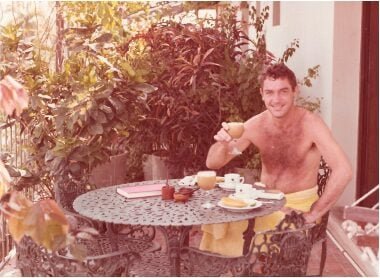
Growing up in the UK, my life was one of extensive travel and exposure to far-flung places. In my first few decades, I traveled around my country and in Europe, and became interested in the different ways of life in five countries close to home. But it wasn’t until I arrived in the Caribbean in 1969 to work as a construction cost consultant for an international company that my passion for travel took hold. There, my proximity to different islands with different cultures piqued my curiosity.
The Caribbean consists of more than 30 countries, each completely different from the other due to centuries of diverse occupiers. Once gold was discovered in South America, a period of piracy followed. Next, sugarcane plantations sprouted up in the Caribbean — and the slave trade brought millions from Africa to harvest sugarcane. Bonded labor expanded among people in countries like Ireland and India. Traders came from Lebanon and China. Along with this influx, a significant Jewish community came seeking religious freedom. All resulting in a mixed potpourri of cultures.
Understanding the cultural differences between the islands was essential to analyzing and managing the risks involved in the development and construction of the projects I advised.
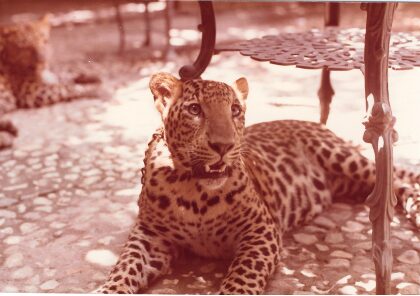
One of my early Caribbean assignments was to manage a road and infrastructure project in St. Kitts to connect the capital Basseterre to Frigate Bay in the south to open it up to tourism. Leaving Jamaica on a Friday meant I could spend the weekend in islands like Haiti, which were much safer then than they are today, and was introduced to characters like Olivier Coculin, an eccentric hotelier who ran luxury hotels – including two leopards who roamed around the hotel and hung out with guests.
My exposure to the colorful cultures throughout the Caribbean soon expanded to the South American continent with its indigenous collective repertoire and the influence of the Spanish and Portuguese conquerors.
Farther afield, Africa revealed many of its splendours. While on safari I felt its primal connection with the extraordinary wildlife. After climbing Mount Kilimanjaro in Tanzania I also had the privilege of surveying the continent’s highest point.
My passion for travel led me to explore several Asian Pacific countries. In Japan I climbed Mount Fuji. In Indonesia, while visiting Borneo, my wife Vivian and I spent time visiting a tribe of headhunters on the Lemanak River – even sleeping in their longhouses. Then in Australia we spent time on a huge sheep station three times the size of the Cayman Islands. We traveled to New Zealand, where one of my ancestors settled more than a century ago, and we later found a street with my last name.
We immersed ourselves in the Ottoman history of the Eastern Bloc countries, including the Balkans in Southeast Europe and Russia. Each different country and culture has taught me different ways of living and communicating.
Our introduction to Bhutan was an extraordinary adventure when my wife Vivian and I trekked for 10 days around the sacred mountains of Chamolhari. Its stunning scenery and strong Buddhist beliefs have given rise to a refreshing philosophy. In Bhutan, they measure their gross national happiness rather than the western world’s measure by GNP as a basis for success.
In the middle of my career, I applied to and was accepted to Harvard University’s President’s Management Program, held over three summers and attended by approximately 120 business leaders from around the world. Our group bonded through our presence on the course and formed a strong alumni group upon graduation. We continue to reunite members in different countries. These reunions enable us to experience other countries, with our hosts providing a local perspective as opposed to a tourist perspective. One such reunion took us to Ho Chi Minh City — formerly Saigon. During our stay, the group visited the War Museum, which told the story of the Vietnam War from a Vietnamese perspective that was less known to people in the US and the West.

My work as a project manager and construction cost consultant eventually expanded to years of working on projects financed and built by the Chinese. These experiences taught me that our Western perspective often focuses on short 5-year business cycles. In China the view more accurately spans a long cycle of 50 years.
As I write this article Vivian and I are planning hiking and sightseeing trips to the countries that will represent the numbers 121 and 122 for us — Romania and Bulgaria. When we researched these destinations to try to understand their culture and lifestyle, we learned from experience that the perspectives we read about are often very different from what we experience on the ground. A personal experience often leads to a more balanced view.
Every country and culture has lessons to teach us about how people approach everyday challenges and what makes different groups of people happy. We have learned that what appears to be a major challenge in one environment is considered a minor inconvenience in others.
Now, in my 80th year, I plan to return to the equator in December to climb Cotopaxi (elevation 19,347 feet) to raise funds for the Red Cross. I know from previous climbs that I will learn a lot from the guides during the expedition which will teach me more about their understanding of the world. I believe we are never too old to learn and appreciate the diverse perspectives and ways of life in our multidimensional world.
****
Martin Bold is a highly successful entrepreneur based in the Cayman Islands. He is a founding member of the Cayman National Cultural Foundation and the National Gallery of the Cayman Islands. In 2012 he was honored by the Government of the Cayman Islands with the 2025 Heroes Day Award by Queen Elizabeth II for services to the preservation and development of Caymanian culture and for laying the foundations for future economic development since the 1970s. his memoirs, More than just climbing – life lessons learned well (Unicorn, November 24, 2025), weaves his personal journey alongside the transformation of the Cayman Islands. Learn more here.
Photos provided by contributors.