


(This post is part of a series on how to coach yourself effectively, focusing on your existential needs as well as your emotional and practical needs. To learn more about Existential Wellness Coaching, please check out my new book published by Routledge and Call Existential Wellness Coaching.)
 In self-coaching parlance, reflection is often considered a gentle activity—something like taking a break, journaling, or “checking in” with yourself. But in truth, reflection is far more consequential than that. It is one of the primary engines of personal change. Without reflection, experience simply accumulates. With reflection, experience becomes actionable.
We all live through events, make decisions, feel emotions and face challenges. But living through something doesn’t automatically mean learning from it. A difficult conversation, a creative failure, a burst of anxiety, a moment of courage—these pass through us quickly. If they are not examined, they fade into the general obscurity of life. Reflection is what slows down experience long enough to create meaning.
Experience alone does not teach
There is a common saying that “experience is the best teacher.” In practice, experience is only a potential teacher. It becomes instructive only when it is reflected.
Consider two people who go through the same setback—a rejected manuscript, a failed business idea, a relationship that ends abruptly. A person moves on quickly, perhaps telling himself a simple story: “It didn’t work out.” The other person pauses and reflects: “What did I want here? What actually happened? Where did I act in alignment with myself and where did I not? What can I try differently next time?”
The difference is not in the experience but in the reflection that follows it. Without reflection, we are prone to repetition. We relive the same patterns, make the same mistakes, and draw the same conclusions. With reflection, we create the possibility of change. We disrupt automation. We begin to see ourselves in motion.
Reflection as meaning-making
At its deepest level, reflection is an act of meaning-making. This is how we interpret our lives. Events do not come with inherent meaning attached. A setback can be interpreted as failure, as feedback, as injustice, as redirection, or as something else entirely. Reflection is the process by which we decide—consciously or unconsciously—what an experience means.
In self-training, the goal is not to forcefully impose “positive” meaning on every event. It can feel unverified and even dismiss real pain. Instead, the aim is to engage with the experience honestly and thoughtfully.
You can ask:
- “What does this experience mean to me now?”
- “Am I tempted to allocate money, and are they helpful?”
- “Is there some way of understanding that supports my continued engagement with life?”
These questions acknowledge that money is not static. It is something we participate in creating.
The Discipline of Looking Again
The word “reflection” suggests a kind of mirroring—a looking back. But in reality, reflection is not just about looking back; Looking at it again, with intent.
When you reflect, you revisit an experience with a different mindset than you did at the time. You’re no longer caught up in instant reactions. You have some distance. This distance allows for new perceptions.
For example, in the heat of an argument, you may feel completely justified. Later, on reflection, you may notice nuances you missed: the other person’s tone, your own defensiveness, moments where the conversation might have shifted.
It’s not about self-responsibility. It’s about gaining a more complete picture. Reflection asks you to be both a participant and an observer of your own life.
Emotional integrity and tolerance
Effective reflection requires emotional honesty. It asks you to face what you’ve felt and done without too much distortion.
This can be challenging. Often the temptation is either to minimize (“it wasn’t a big deal”) or to exaggerate (“it was a disaster”). Reflection invites a more balanced stance: “What actually happened and how did it affect me?”
It requires a certain tolerance for discomfort. Some reflections will bring you into contact with regret, sadness or uncertainty. If you completely avoid these feelings, your reflection will remain superficial.
At the same time, reflection is not meant to become self-punishment. There is a difference between honest examination and harsh self-criticism. The former leads to growth; The latter often leads to avoidance.
A useful question here is: “Am I trying to understand, or am I trying to judge?” Purpose is important.
Reflection and choice
One of the most important functions of reflection is to reconnect you with the power of your choice.
When you get caught up in the flow of events, it can seem as if things are happening to you. Reflection reintroduces the dimension of agency. It helps you see where your choices were, where you made them, and where you might choose differently in the future
For example:
- “What choice did I make in this situation?”
- “What options were available to me?”
- “Given what I understand now, what can I choose next time?”
These questions don’t assume you can control everything. Life is full of limitations and unpredictability. But they assume you’re not completely passive. There is always some level of participation. Acknowledging that participation is essential to change.
Rhythm of reflection
Reflection is not something that can be done once in a while, only in moments of crisis. It is most powerful when it becomes part of a regular rhythm.
It does not require hours of analysis. Even a few minutes of deliberate reflection can be valuable. You can create simple exercises such as:
- A daily check-in: “What stood out today? What did I learn?”
- A weekly review: “What went well this week? What didn’t? What do I want to take forward?”
- A post-event reflection: “What happened in that conversation or meeting and what can I take away from it?”
The key is consistency. Over time, these small acts of reflection accumulate. They build a body of self-knowledge that informs your future actions.
Reflection as self-relation
There is another dimension to reflection that is often overlooked: it shapes your relationship with yourself.
When you take time to reflect, you signal that your experience matters. Become someone who listens to yourself, who is interested in your own life, who is willing to engage thoughtfully with it.
This stands in contrast to a more neglected position, where experiences are relegated to the past, ignored or dismissed. In this sense, reflection is an act of self-respect.
It is also an act of companionship. In effect, you are accompanying yourself through your life—witnessing, questioning, and supporting your own growth.
Change from reflection
Reflection alone does not guarantee change. It must eventually connect to action. But without reflection, action is often blind or repetitive.
The process might look like this:
- experience – Something happens.
- reflection – You can understand by testing.
- compatibility – You decide what to do differently.
- new experience – You act and something new happens.
This cycle repeats. Over time, this leads to gradual but meaningful change.
You become more intentional. You react without reacting. You align your actions more closely with your values and your understanding of yourself.
Learning to reflect well
Like any skill, reflection can be improved. It benefits from structure and purpose. You can test with:
- Just write without thinking, to make your reflection more coherent.
- Ask specific questions instead of engaging in vague rumours.
- Set deadlines, so reflection doesn’t turn into endless analysis.
- Revisiting past images to notice patterns over time.
The aim is not to be fully self-aware – that is neither possible nor necessary. The goal is to become more aware than you are, learn more from your experiences, and be more able to manage your own life.
A quiet but powerful exercise
Reflection is not dramatic. It doesn’t declare itself. It often happens quietly, in the margins of your day. And yet, it is one of the most powerful tools available in self-training. By reflecting, you transform experience into insight, insight into choice, and choice into change. You begin to live intentionally, not just reactively.
In a world that often pushes for speed, distraction and constant forward motion, reflection is a counter-practice. It asks you to pause, look again and engage with your life as something worth understanding. And from that realization, change is possible.

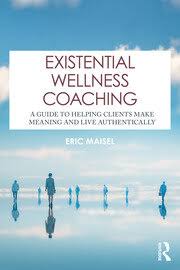 This comprehensive guide integrates existential philosophy with wellness coaching techniques, equipping coaches with powerful tools to help clients meet their existential challenges and live lives of authentic purpose, deep meaning, and sustainable wellness.
Dr. Eric Maisel introduces Existential Wellness Coaching as a holistic approach that recognizes how physical and emotional well-being are intrinsically connected to our purpose, meaning, and authenticity. Based on the concepts of existential philosophy, this practical guide helps coaches, therapists, and other mental health practitioners deepen their work with clients to address existential challenges and develop resilience to maintain existential well-being in clients’ challenging times. Unlike traditional coaching that focuses only on goals or conventional therapies that treat symptoms, existential wellness coaching empowers clients to confront life’s fundamental questions while developing concrete strategies for living with greater intention. Each chapter systematically addresses key existential concerns, including self-relationship, value identification, purpose creation, meaning-making, authenticity, and personal life philosophy development.
Offering new ways of thinking about common existential issues, this book contains tools to help coaches enable their clients to make life-changing changes and necessary emotional restructuring.
–
iStock Image



