


In 2001, forensic artist Richard Neave and his team reconstructed a face that the world thought it knew. What emerged was not the pale, European Christ of Western art, but a Middle Eastern man with dark hair, brown skin, and characteristics of the climate and culture of his time.
Historian Joan Taylor reached the same conclusion. Jesus probably had olive skin, dark eyes, and stood about average height for a first-century Jewish man living under Roman occupation. He was not outside history but entirely within it, shaped by the religious and economic pressures of his world.
He was born in Bethlehem and raised in Nazareth. In his own language he was called jesus.
This is not a minor correction. It changes the story.
It changed not only who Jesus was, but how the systems treated him and how they still treated the weak.
Jesus moved through a world shaped by imperial rule and internal divisions. Fear and political instability were not contextual conditions. They shaped everyday life.
By the time he was arrested, the pattern was familiar. He was identified, taken at night, interrogated and beaten. The Gospels preserve competing accounts of duty and meaning, reflecting the initial struggle over what his death meant. What they agree on is simple. He was handed over to the state.
His execution was not an accident. It was policy.
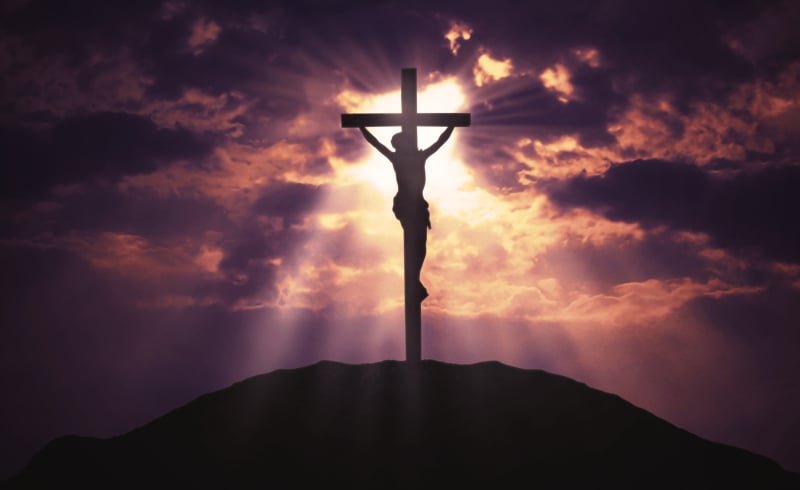
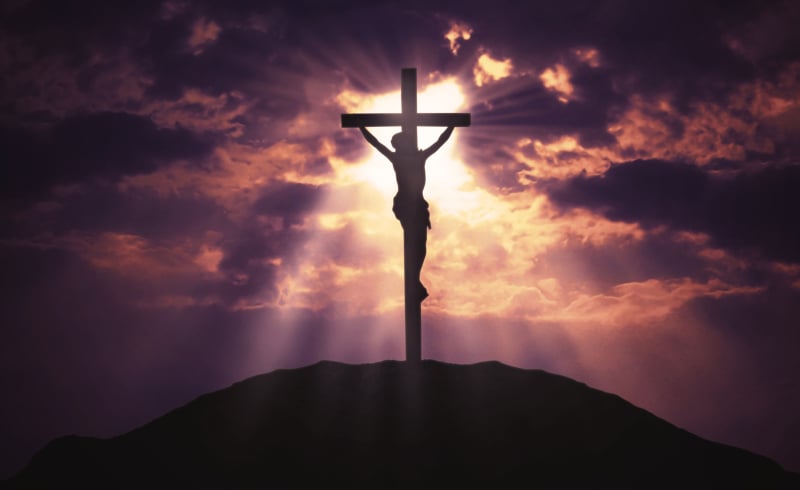
Crucifixion was a Roman instrument of control, designed not only to kill but also to make suffering visible and instructive. The body becomes a warning. Power was communicated through exposure, through public display of results.
This is what makes the story so difficult. It was valid. It was orderly. It was widely understood as justified by those who approved it. And it was still wrong.
This is what makes crucifixion more than a method of killing. It functioned as a public technology of state control, designed to bind suffering to authority. The body became the message. Power was made public not only through death, but through visibility, through instructions embedded in pain.
Modern systems of violence rarely rely on such visibility. They instead tend toward distance and systematic restraint. Losses are distributed throughout the authorization chain. It is classified and managed through processes that make individual decisions from direct encounters. What changes is not just the method of force, but the organization of moral perception, how responsibility is diffused, and how suffering is rendered distant even as it is widespread.
Today, in the Gaza Strip, images continue to emerge of destroyed neighborhoods, displaced families and children pulled from the rubble. These realities are interpreted through competing structures of meaning, including security, survival, trauma, and political necessity, each carrying real historical and emotional weight.
But the extent of this violence does not remain in one place.
Across the vast region, children have been killed and injured in multiple arenas of conflict. In Gaza, Lebanon, Israel and Iran, families have buried children whose lives ended in strikes and attacks justified by competing claims of defense and resistance. While the scale, causes and contexts differ sharply across each setting, no side is untouched by early childhood loss.
This is not equality. It’s recognition. Distinct political realities can still produce a shared humanitarian outcome: children become parallel within systems that speak the language of need.
And yet recognition can drift toward abstraction when distanced.
Changing the scale breaks that distance.
A member of my family is a special education teacher in a district characterized by poverty, where food insecurity is a recurring presence in daily life.
Jesus’ teaching becomes sharp here. He offers “feed the hungry” and “clothe the naked” not as metaphors or desires, but as commands. These are not symbolic ideals. They are the moral ground of his view of human life.
The other day, they shared something a student had created in class: a graphic novel about domestic life.
Inside, a third grader drew a refrigerator marked with an X and simply wrote, “No food.” He pulled his mother on the bed with X’s eyes on it. His siblings stand nearby saying the same thing: no food.
There is a silence that follows such stories. Not because they are rare, but because they are real.
At that point, the command to feed the hungry is no longer far-fetched or theological. It becomes immediate and unresolved. It presses against every broad claim about necessity and allocation of resources.
In a society capable of directing vast resources toward military might, the persistence of child hunger is not a failure of power. It is a reflection of priorities.
The same world that creates advanced defenses and immune systems also creates a third grader who paints a refrigerator that says “no food.”
In the same moral arena where children are killed in war abroad, children here experience a deprivation that is quieter but no less real.
The distance between these realities is not just political. It is moral.
What matters, then, is how violence is normalized within systems of authority. Responsibilities are dispersed. Each actor follows procedures. Each decision appears limited in scope. Yet together, they create outcomes that no single participant fully controls or can easily deny.
This is how injustice is sustained. Not just through hate, but through structure. Not just through intention, but through obedience.
As Henry David Thoreau argued, when the law makes the individual the instrument of injustice, moral responsibility does not dissolve within the system. It comes back to the individual. Refusal, in such moments, becomes a form of moral clarity.
That claim is not simple. This raises questions of risk and competitive obligations. It also raises a difficult question: What happens when moral clarity demands attention to suffering both before us and before us?
The world has no shortage of information about Gaza. Images are constant, and interpretations are global. What remains uncertain is not awareness, but reaction. Whether recognition becomes action, or whether it is absorbed into the general language of need.
Returning to the crucifixion does not mean collapsing history into the present. One must recognize a recurring structure of how power works: a Jewish person in the Middle East, judged as dangerous, is processed through a system of authority and killed in the name of order.
That structure is not a century old.
It appears wherever human life is subject to the maintenance of political, institutional or economic control.
The question is not just what we see.
What we see—far and near home—will change what we can no longer morally ignore. George Cassidy Payne is a graduate of CRCDS (2006).
–
The Good Men Project is a mission-driven men’s media platform. A premier platform for stories about men, identity, fatherhood, and emotional intelligence—and a trusted home for the national conversation about masculinity.
Good Men Project accepts paid guest posts and provides bulk guest post packages for SEO agencies and resellers.


If you believe in the work we’re doing at The Good Men Project, please join us as a Premium Member today.
All premium members can watch The Good Men Project without any ads.
Need more information? A full list of benefits is here.
Photo credit: iStock