


–
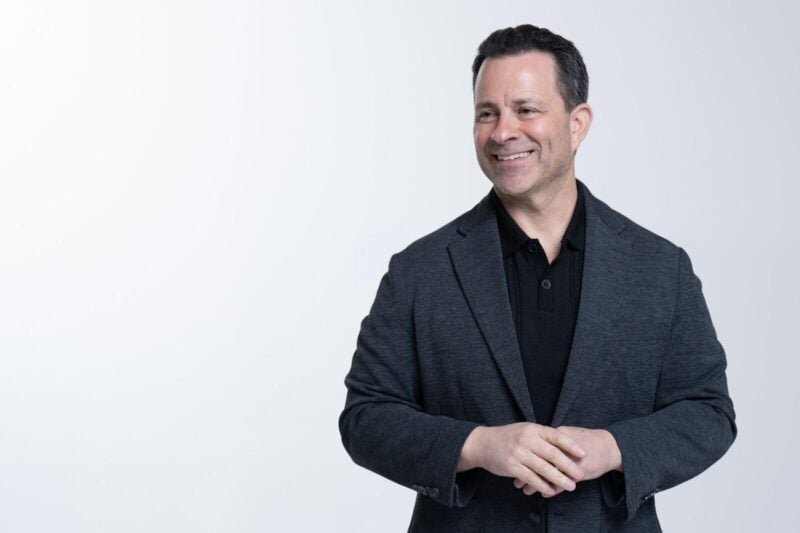
Most men who ascend to senior leadership eventually hit the same wall, the strategy is right, the team capable, the vision clear, and yet they never envisioned the change they were about to announce. Michael J. Lopez has spent twenty years watching that exact moment unfold inside the company, and he has a pretty unsentimental read about why it happens.
As its founder Michael J. Lopez ConsultingAn author, a former intelligence officer, a Fortune 500 consultant, and a high school football coach, Lopez has become one of the more honest voices in the world of corporate executive coaching, and part of what makes him worth listening to is that he’s willing to turn the mirror on himself before turning it on someone else.
The Unconventional Path That Created Michael J. Lopez Executive Coaching
Lopez did not take a natural path to this job, beginning his career as an intelligence officer in the US intelligence community, then spending many years in senior roles at Booz Allen Hamilton, EY, KPMG, Prophet Brand Strategy and Smiths Interconnect. It’s a resume that evokes a certain kind of mentorship, polished, careful and alert with uncomfortable truths.
Lopez went the other way, and his Michael J. Lopez consulting practice today works with clients across industries such as Entergy, Compass Healthcare, Energy Northwest, and the California Housing Finance Agency, a through-line that refuses to dress up broken practices in new language. He’s a former college athlete and member of the Positive Coaching Alliance Leadership Council, which tells you something about how he thinks about development, as a long game built on reps, feedback and showing up on uncomfortable days.
Why Michael J. Lopez Coach’s Approach to Men’s Leadership Hits Differently
Most change programs, he argues, aren’t built for the people inside the org chart, so you get emails, documents, meetings, training and structured plans, and then leaders get distracted if behavior doesn’t change. His approach is straightforward, change isn’t an information problem, it’s a behavior problem, and you can’t email a new habit any more than you can email a way to better parenting.
This is where his work as a behavioral opportunity consultant pulls from the real science of behavior change in the workplace, leaning on the neuroscience of leadership performance to explain what most frameworks quietly ignore, which is that the adult brain is rewired through repetition, feedback, environment, and modeling, not memos. His approach to culture change consulting and organizational effectiveness coaching is built around those mechanics, no matter what the latest management book sells.
His book, Change: Six Science-Backed Strategies to Transform Your Brain, Body, and Behavior, condenses thousands of hours of research into a single usable system, and the thesis is a gut punch to anyone who’s blamed themselves for not following through on a resolution, that the desire to change is almost never an obstacle to the system.


Image credit: Michael J. Lopez
The 59 percent figure should sit with every man in a leadership seat
In early 2026, Lopez released a national survey of 1,000 American workers, weighted for age, gender, geography and ethnicity for the 2020 US Census, with a margin of error of plus or minus 3.1% at 95% confidence, and Reuters picked it up, with results that are hard to read as a leader.
Ninety-nine percent of workers say they’ve lost confidence in company leadership because of how a change was handled, not because of the change, but because of the way it was made, and that’s a stat that would upset anyone who’s ever stood in front of a team and promised some “smooth” or “quick change.”
The second finding is that few meetings should be stopped cold, because when employees were asked what resources their organizations provide during the transition and what they actually need, the researchers expected a gap, but what they found was zero overlap. Organizations provide emails, documents, meetings, training and structured planning, while employees say they need time for practice, regular feedback, leadership modeling, permission to fail and a coach, with one item missing, which is less of a communication breakdown and more of a leadership alignment problem at the core.
Inside Michael Lopez’s Peak Performance Executive Coaching Playbook
Lopez builds his firm around three types of engagements, full-lifecycle organizational consulting, executive advisory work, and a limited slate of one-on-one coaching relationships each year, and in all of this he observes what he calls the minimization cycle, the practice of accepting leadership change as easy, under-resourcing it, and then starting all the work, and then starting all the work. Over
His peak performance executive coaching, employee performance improvement consulting, and workplace performance optimization work is built on behavioral interventions, feedback loops, and accountability frameworks designed around how teams actually work, not how a strategy deck claims. Clorox VP Hilda West said she rolled up her sleeves and customized solutions rather than rolling out cookie-cutter processes, and Entergy Site VP Brad Kapelas, who oversees the Grand Gulf Nuclear Station, reported that engagement, ownership and business performance all climbed after his team reset their vision. Specifically in his work with Grand Gulf, Michael helped the team save over $60 million and, at the same time, go from worst to first in the nuclear industry’s performance rating.
Confessions that Michael J. Makes Lopez worth listening to
What lends weight to his criticism is that he’s not shouting it from a safe distance, as Lopez openly admits that he spent years as a Big Four managing director using his own research to deliver precise strategies that employees now see as ineffective. He wrote memos, conducted training, created rollout plans and watched them consistently fail, and he stopped pretending that it was a failure of execution rather than a failure of procedure.
His willingness to audit his own career is something that men in leadership don’t always model well, and it’s also the backbone of the three commitments he makes on his site, which are to be honest even when it’s uncomfortable, offer practical strategies rather than theatrics, and lead by example at home, at work and in friendships.


Image credit: Michael J. Lopez
Michael J. What Lopez would tell you over coffee
The honest takeaway from his work isn’t that change is impossible, it’s that most leaders are still designing it for organizational convenience rather than human biology, because emails scale when responses don’t come, and reporting on training is easy when behavior doesn’t change. If you’re leading a team through an AI transition, a restructuring, or a cultural reset, and your plan is built around what’s easy to deliver rather than actually repurposing behavior, the next transition will fail just like the last.
2026 study finds workers aren’t stingy about change, they’re passionate about how their employers are doing it, and that difference is where Michael J. Lopez has built his practice, treating change as the behavioral problem it always has been, and offering leaders a roadmap that actually matches people’s growth.
–



