


by Jim Wayne
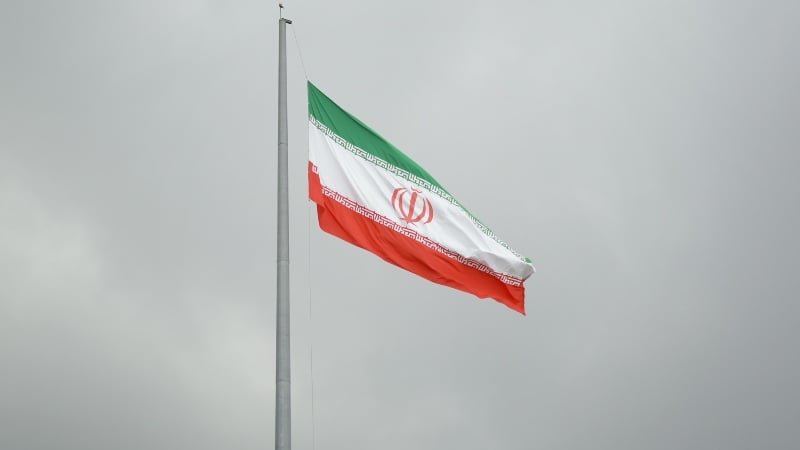
The senseless Iran war has already claimed the lives of two young Kentuckians. Their lifetime commitment ended when President Trump abandoned nuclear weapons talks with Iran in favor of military destruction and death. how sad
Their deaths are part of a much older and recurring human tragedy: the tendency of nations to turn to war despite peaceful alternatives.
Thucydides (460–400 BC), the Greek historian and general, observed that the powerful do what they want, unless they are prevented by others who are just as powerful and greedy. His observation that centuries of violence have led many to wonder whether such a bleak view of human conflict was correct.
More than two millennia later, the world wars of the 20th century showed just how destructive fighting between nations can be. Advanced and civilized nations have engaged in the most destructive conflicts in human history, killing more than a hundred million people, half of them civilians.
(By the end of 1945 it was thought that people had had enough. The United Nations was founded by enlightened practical world leaders to peacefully resolve differences. International law-making would follow. This international system would save the world from further self-destruction in the nuclear age.
But in less than a decade the two postwar superpowers, the United States and the Soviet Union, invaded North Korea without authorization and invaded Eastern and Central Europe (USSR), bypassing the United Nations in violation of international law. Next came Vietnam (US), Cambodia (US), Laos (US), and Afghanistan (USSR). And so it is, by direct action or by proxy: Kuwait, Iraq, Dominican Republic, Guatemala, Nepal, Tibet, Congo, Palestine, Lebanon, Syria, Gaza, Ukraine, on and on.
More madness
The latest insanity is the Israeli-American partnership to contain Iran. President Trump and his ministers say this is a 47-year war started by Iran. Only an ignorant of history would make such a statement. It has been a 73-year war between the US and Iran, shaped by intervention, retaliation, sanctions and violence.
In 1953, the CIA and Britain helped overthrow Iran’s democratically elected leader, Mohammad Mossadegh, when he nationalized the British-controlled Anglo-Iranian Oil Company. Shah Mohammad Reza Pahlavi ruled Iran with strong support from the United States while suppressing opposition through a formidable secret police force.
In 1979, the Shah was overthrown and replaced by Ayatollah Ruhollah Khomeini. Iranian students occupied the US embassy in Tehran and held Americans hostage for over a year. Decades of sanctions, hostilities, proxy conflicts and bloodshed followed. The cycle continues today with no apparent end and little regard for the humanitarian consequences, including the recent killing of 166 school children by our military in Tehran.
So, 81 years after the founding of the United Nations as a forum for international dispute settlement, can we conclude that Thucydides was right? Is war inevitable? Is the tendency to resolve differences through mutual killing so ingrained in human DNA that we hope to retain it even in the face of nuclear Armageddon?
This question has occupied philosophers, spiritual leaders and scientists. In the 1980s, the United Nations commissioned an international group of behavioral scientists to examine whether violence really is part of unchangeable human nature. After years of research, the group produced an important document known as The Seville Statement on Violence.
Its conclusion was profound: violence is a learned behavior, not an inevitable human trait.
The research confirms what mystics of various spiritual traditions have believed for centuries: As our consciousness evolves, differences can be settled without violence. Empathy, cooperation and peaceful coexistence are not signs of weakness or naive idealism. They are part of humanity’s potential evolution.
That moral challenge remains urgent today when wars rage, civilians die, and political leaders speak more readily of military action than diplomacy.
When Pope Leo condemns the current war, he stands within both a moral tradition and a growing body of human understanding that rejects violence as destiny. His message is simple but urgently needed, and world leaders would be wise to heed it: no more human blood will be spilled.
kentucky lantern Part of States Newsroom, a nonprofit news network supported by grants and a coalition of donors as a 501c(3) public charity. The Kentucky Lantern maintains editorial independence. For questions contact editor Linda Blackford: (email protected).
–
Previously published With kentuckylantern on Creative Commons License
***
Join The Good Men Project as a Premium Member today.
All premium members can watch The Good Men Project without any ads. Need more information? A full list of benefits is here.
–
Photo credit: splash