


By Hannah Doctor-Loeb
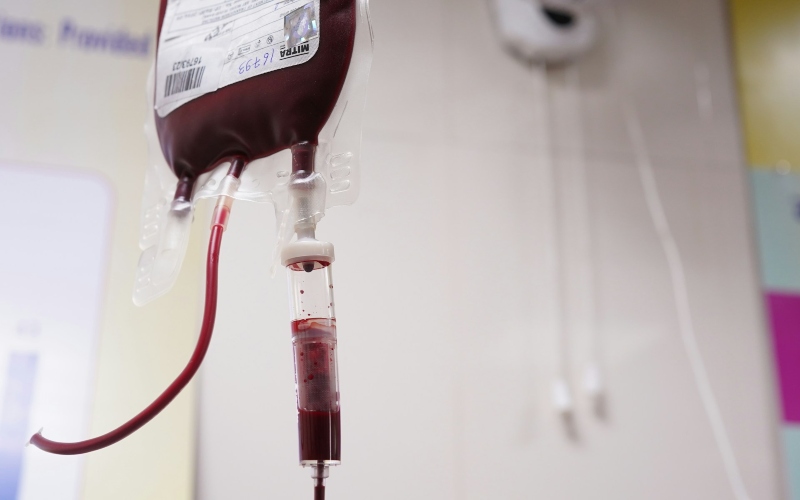
Every day, hospitals rely on platelet transfusions to stop bleeding, help treat cancer, and help patients recover from surgery and critical illness. Yet one of medicine’s most essential blood products is its most fragile.
Unlike red blood cells, which can be stored for weeks, platelets last only a few days. They must also be kept at room temperature, which increases the risk of contamination and complicates storage and transportation. This leaves hospitals in a constant race to keep supplies flowing and dependent on the availability of donors.
To ease this pressure, a team of EU-funded researchers is working on an unusual solution. They are making platelets outside of the human body using silk fibroin, a protein derived from silkworms.
“We create platelets in the lab to overcome this limitation and address the growing demand,” said Professor Alessandra Balduini, a hematologist and researcher at the Department of Molecular Medicine at the University of Pavia in Italy and one of the lead researchers behind the work.
Platelet challenge
Balduini and colleagues across Europe are working on three interconnected EU-funded research projects, bringing together the tools needed to reliably produce platelets in the lab.
Platelets are small, disc-shaped cell fragments that help blood clot and stop bleeding. They are routinely used in hospitals, especially for cancer patients undergoing chemotherapy, which can severely reduce the body’s natural platelet production. They are also used in emergency rooms and surgical wards.
Currently, hospitals and blood banks depend almost entirely on donors. According to the World Health Organization, approximately 118 million blood donations are collected worldwide each year. But maintaining platelet supplies remains difficult because the products expire so quickly.
Silk is one of the few materials that can be used for bone marrow and platelets.
“The hurdle for platelets is that they can only be stored for five days,” Baldwini explained. Supply can also fluctuate significantly throughout the year. Donation rates often drop during the summer holidays, when major disruptions like pandemics can quickly strain the national blood system.
Adding to the complexity, approximately 15% of platelet transfusions require a specially matched tissue type, making the shortage even more difficult.
For years, researchers around the world have been trying to develop laboratory-grown platelets as a more stable and controllable alternative. But recreating the body’s natural platelet production system outside the human body has proven extraordinarily difficult.
Regenerating bone marrow in the lab
Inside the human body, platelets are produced in the bone marrow by large cells called megakaryocytes. These cells release platelets into the bloodstream in response to highly specific biological and mechanical signals. Replicating that process outside the body is not straightforward.
“Many labs are trying to make platelets for transfusion purposes, but it’s not that easy,” said Dr. Hana Raslova, director of research at the Gustave Roussy Institute near Paris and one of Baldwini’s partners in the SilkPlatelet project.
The biggest challenge is reproducing the complex structure of bone marrow. Bone marrow contains several specialized microenvironments, or “niches,” that help regulate how blood cells grow and develop.
To recreate these conditions, the researchers turned to an unexpected material: silk fibroin, a protein derived from silkworm cocoons.
As part of the EU-funded SilkFUSION initiative, which ran from 2017 to 2022, Balduini and his colleagues developed a silk-based bioreactor designed to mimic the environment inside human bone marrow. Silk fibroin is strong, flexible and biocompatible, making it particularly suitable for reproducing the soft structure of living tissue.
“Silk is one of the few materials that can be used for bone marrow and platelets,” Baldwini explained. “You want a material that can support the process without affecting performance, and silk can do that.”
Artificial bone marrow allows researchers to begin testing whether platelets can be produced reliably outside the body.
Construction of a platelet factory
In the follow-up SilkPlatelet initiative, which ended in December 2025, the researchers took the idea even further.
Using stem cells, they produced megakaryocytes inside silk bioreactor systems, or bone marrow “factories.”
We are confident that in the near future, it will be possible to develop platelets for various clinical applications.
Researchers have also worked to improve the efficiency of platelet production with the use of genetically modified stem cells.
“The process is quite expensive, but we’re using genetically modified stem cells to make more platelets from fewer cells, so we’ve optimized the value of the whole technology by improving platelet production,” Raslova explains.
Although the work remains experimental, researchers say the technology is steadily moving closer to clinical reality. Bone marrow bioreactors are already being tested by drug companies and research groups interested in future medical applications.
Looking beyond transfusions
The work opened up wider possibilities beyond just platelet transfusions.
In the SILKink initiative, which runs until May 2026, researchers have developed a silk-based “bio-ink” that can be used to 3D-print highly accurate models of bone marrow tissue in various shapes and sizes.
These printed tissues can help scientists study blood diseases, test new drugs, and better understand how stem cells behave in different biological environments.
The long-term ambition behind these three projects is significant: to shift the platelet supply from a system at risk of shortages to one that is heavily dependent on donors and able to reliably produce platelets on demand.
For that to happen, today’s experimental systems will need to be turned into a large-scale, clinically ready production line—something researchers are still working on.
Although it could be years before these lab-derived platelets reach transfusion clinics, researchers are optimistic.
“We are convinced that in the near future, it will be possible to produce platelets for various clinical applications,” said Raslova.
Before that happens, researchers must demonstrate that laboratory-grown platelets are safe, effective and scalable enough for routine clinical use. Small animal trials have been successfully conducted and clinical application is the next step.
“We still need to understand the proof of principle and scale up to clinical applications, but EU funding has been critical in helping us move forward,” Baldwini said.
For patients dependent on regular platelet transfusions, this could ultimately mean fewer interruptions in treatment. For medical workers, it could offer a way to strengthen one of health care’s most fragile supply chains.
The research in this article was partially funded by the European Innovation Council (EIC). The views of the interviewees do not necessarily reflect the views of the European Commission. If you liked this article, please consider sharing it on social media.
–
This article was originally published by Horizon, EU Research and Innovation Magazine with Creative Commons Attribution
***


If you believe in the work we’re doing at The Good Men Project, please join us as a Premium Member today.
All premium members can watch The Good Men Project without any ads.
Need more information? A full list of benefits is here.
–
Image: splash



