

Taking care of our mental and emotional health is an important aspect of living well, which is often overlooked by a significant portion of the population. Taking care of ourselves can take many forms, and one of the most important ways is to set boundaries for ourselves about how we relate to others.
Healthy boundaries can be set and maintained by learning how to say ‘no’ to requests, opportunities, and suggestions that you may not be comfortable with for whatever reason. Most people try to agree as much as possible with those around them, mistakenly thinking that the way to achieve this is by saying ‘yes to everything’. Instead, it leads to frustration, stress and overwhelm.
Let’s take a look at the power of the word ‘no’ and how you can use it to create healthy boundaries for yourself, some of the ways it benefits us, and how to train ourselves to use it more often.
What is the power of no?
No Power can be described as a shield against exploitation that can save you a lot of time, money and mental anguish. They can be used by anyone looking to create healthy boundaries by trying to live harmoniously with those around them. These are the kinds of boundaries that ensure everyone lives in an environment of mutual respect and consideration.
Saying no to those around us can be a terrifying prospect, especially since it goes against our natural inclination to be reassuring and polite to our neighbors. Still, it can be an essential tool in your mental health toolbox, as an inability or unwillingness to say no when necessary and harboring can lead to burnout, resentment, and overall stress.
Is saying no a bad thing?
Part of being a functioning adult is taking responsibility for your health and well-being. A key aspect of this is deciding what is good for you and what is not, and this will include what you are willing to do and what you are not willing to do; With this reason, There’s nothing wrong with saying no, as long as it’s the right decision for you.
Whenever a loved one, friend or colleague brings you a request, it is up to you to say yes or no. Although your instincts may say yes every time, you have to remember that you will lose time, energy and potential opportunities when you commit to fulfilling the request you face. As a responsible, mature person, you should develop an attitude of careful reflection whenever you are presented with a request or question that will take your resources.
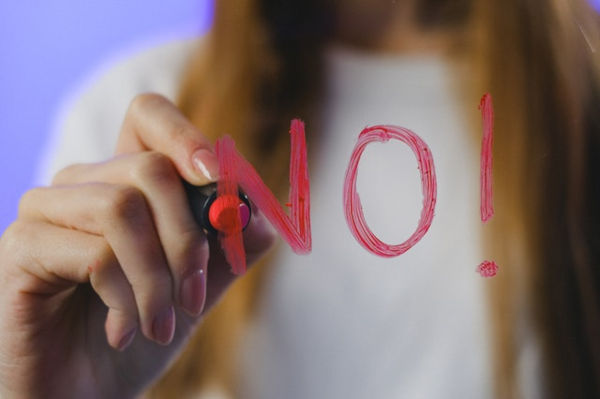
What are the benefits of saying no?
When we use the power of the word ‘no’ to set healthy boundaries regarding our time, effort and personal space, we not only eliminate the source of many interpersonal conflicts and relationship challenges but also enrich our lives in many other ways. These include:
Establish healthy relationships
Cooperation is at the heart of all social relationships, whether professional or personal. We often try to make those around us as comfortable and reassuring as possible, which often leads us to say yes to situations where we don’t want to. This may seem like a good idea at first, but it can quickly lead to resentment and bad feelings on your part because you may feel abused or unappreciated after the fact. To minimize the possibility of this happening, the ability to say no or yes where appropriate will come in handy.
Leave room for other options
It’s important to realize that every time we say yes to something, we’re essentially saying no to everything else. In other words, saying yes means we commit to a specific action some block into the future, and we can’t allocate that time to anything else in the world. This makes saying yes akin to taking out a loan – you have to pay it back whether you like it or not, so make sure it’s spent on things you value.
Less chance of regret
A great way to make sure you don’t say yes to a request or question is to take some time before giving your response. While it’s true that we often have to do things we don’t like as responsible people, if you find yourself saying yes to everything, you may need to take a closer look at your decisions.
Being a yes-to-everything type of person is a sure recipe for building resentment against the people around you, which is detrimental to your relationships with them.
Establishing the value of your time
Everyone, including yourself, who values your time, needs to practice saying no to what you don’t want to do. The act of turning down unwanted offers or situations is effective in creating distance between you and negative characters or situations that you may encounter.
Related reading: Scientific research on positive thinking – Opens in new tab.

How to say no without being rude
There are many reasons why people find it easier to say yes than no, even when they prefer the latter. Whether at home, at work, at school, around strangers, or among loved ones, for most ordinary people when faced with a request, the tendency is to say yes so that we don’t seem rude, unhelpful, or arrogant.
In today’s society it is important to cooperate and cooperate with those around you to live well, which means saying yes to some requests. However, in our efforts to maintain healthy relationships with those around us, we should not go overboard. Saying no will be a necessity, but there are ways you can do it so that no feelings are hurt and the relationship remains as strong as ever.
- the first Above all, you need to be direct when saying no. By all means, do what you feel capable of doing, but don’t hesitate or slur your words whenever you’re giving a negative answer. The idea is to make sure the answer is delivered clearly and unambiguously so that the requester doesn’t know to press the point in hopes of changing your mind. Be assertive without being brash.
- the secondTake your time. When you take a few seconds to consider your answer before delivering it, the requester will be more likely to believe that you have given their request enough thought and that your decision is a well-considered, solid answer. While you have the right to decide how to spend your own time, a quick, hands-off reply can be interpreted as a very rude gesture.
- the thirdBe sympathetic to the requester’s plight. They may be in a tight bind and you may want to show that while you sympathize with their situation, you can’t just help them. A good way to show that you’re willing to help where possible is to tell them what you can do even if you decline their initial request. This will show your willingness to help according to your availability and ability.

How do you get better at saying no?
A popular concept of increased productivity and higher performance speaks of ‘upgrading your numbers’. This strategy seeks to make people more aware of the value of their time as they become more successful and their time becomes more valuable.
Say you own your own business. In the early days when you’re just starting out, you might be able to get a friend to help you with their project in a few hours without any hassle. Ten years later, when you’re the CEO of a thriving company, you’ll have to consider the decision to take time off work to help your friend more closely. Because the value of your time has gone up.
In such situations you need to increase or upgrade your marks to maintain your progress in life. In addition to saying no to distractions, you need to find seemingly positive opportunities and things that add marginal value to your life.
People from all walks of life make a common mistake: worrying about their productivity when the problem is with their favorite activity. They try to optimize their performance instead of eliminating activities that pointlessly fill up their day time. As they say, there’s no point in doing the wrong thing well.
final thought
Saying no doesn’t come easily to most people, so don’t worry if you’re still saying yes to all the requests that come your way. It takes time to develop the resilience necessary to say no when needed, so don’t be afraid to give yourself time to practice it. Eventually, you’ll start to enjoy putting yourself and your needs first and getting the no.
Related reading: How do my thoughts, beliefs and actions affect my results? – Opens in new tab.
Featured Image by Ulric Leon from Pixabay