


–
Most men treat yard work as a box to check. Cut the lawn, trim the edges, maybe plant something, done. But if you skip mulch — or apply it incorrectly — you’re leaving real money on the table and making more work for yourself every single season.
Done right, mulching is one of the highest-return investments you can make on your property. Done wrong, it kills plants, invites pests and looks worse than bare soil. Here’s what you really need to know.
Why Mulch Is More Important Than You Think
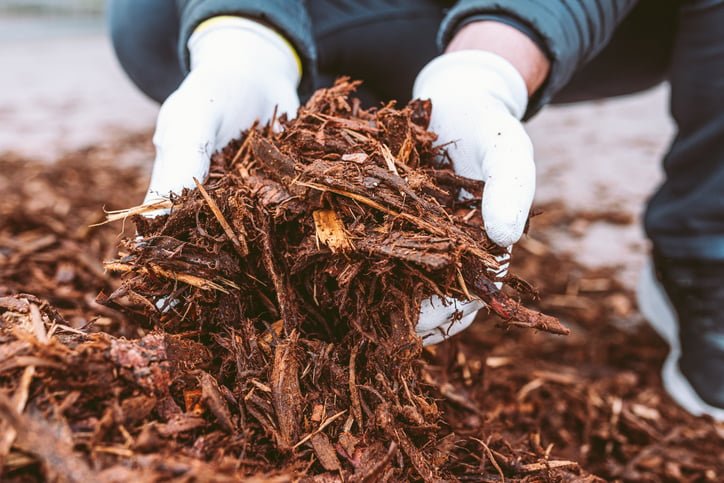
Mulch is not decorative. It is functional. A proper layer of organic mulch does five things simultaneously that no other single landscaping material can match:
It suppresses weeds by blocking light at the soil level. It retains soil moisture, reducing how often you need to water by up to 70 percent. It moderates soil temperature, protecting the root system from summer heat and winter freeze-thaw cycles. It prevents erosion in sloping beds during heavy rains. And as it breaks down over time, it adds organic matter to your soil, reducing reliance on artificial fertilizers.
That last point is worth emphasizing. Most guys think of mulch as a one-season thing — you put it down in the spring, it looks good, it fades, you do it again. But organic hardwood mulch is actively improving your soil every year it breaks down. After two or three years of consistent mulching, the soil structure of your bed will be measurably better than when you started.
Organic vs. Dyed — What Are You Really Buying?
Walk into any big box store and you’ll see bags of bright red and deep black mulch piled to the ceiling. That color doesn’t come from the wood—it comes from synthetic dyes, and the wood is often derived from recycled wood, which contains material that was chemically treated in a previous life.
Natural hardwood mulch – no dyes, no additives, just shredded hardwood bark – is a fundamentally different product. It breaks down cleaners, it doesn’t disrupt the chemistry in your soil, and it doesn’t fade to a blotchy gray mess after six weeks in the sun. The color is earthy out of the gate, but it ages beautifully and does its job at the earthy level where it counts.
For most homeowners, the choice is easy once you understand what you’re actually buying.
How much do you need?
This is where most homeowners either buy more and waste money, or buy less and leave the soil exposed. The math isn’t complicated, but it’s also not intuitive, because mulch is sold by the cubic yard—not square footage.
The formula is: Square footage × depth in inches ÷ 324 = cubic yards required
Two to three inches is the target depth for most beds. Go thin and you lose weed control. Get thick and you risk suffocating the root system and creating a moisture trap that invites fungal problems and pests.
If you don’t want to do the math yourself, a free online Mulch Calculator It operates in under a minute — input your bed dimensions and desired depth and it figures out exactly how many yards to order. No guesswork, no waste.
Bulk vs. Bagged — The Math Isn’t Close
If you’re buying bagged mulch from a hardware store for anything larger than a few small beds, you’re paying a significant premium for the convenience of carrying it yourself. A two-cubic-foot bag typically runs $5-7. A cubic yard contains 13.5 bags, meaning you’re paying $67-95 per cubic yard in bagged form.
Bulk Mulch Delivery from a local Hardwood Mulch Supplier Typically runs $35-55 per cubic yard delivered to your driveway, depending on quantity and location. For any yard requiring more than three or four cubic yards—which is most yards—bulk mulch delivery is the obvious choice, both financially and logistically.
The bags are also damaged. Plastic, packaging, trips back and forth from the car. A single bulk delivery drops everything at once.
Application: Killing plants that is wrong
Even good mulch applied poorly can cause problems. Here are the four most common errors:
Volcano mulching. Mulching against tree trunks in a cone shape is the single most common landscaping mistake homeowners make. It traps moisture against the bark, promotes rot, invites disease and slowly kills the tree. Keep mulch two to three inches away from any trunks or trunks.
Going too deep. Four inches seems like more protection. It’s not – it’s a moisture trap and prevents oxygen from reaching the roots. Two to three inches is standard for a reason.
Skipping the edge. Mulch left in the middle of beds without clean edges looks sloppy and transfers to the lawn. Edge your bed first, then mulch.
Mulching dry soil. If your soil becomes bone dry after applying mulch, water it first. Mulch traps whatever moisture it has — if nothing else, you’re sealing in drought.
When mulch
Spring and fall are the two best windows. Spring mulching starts after the soil warms — usually late April to May, depending on your climate — and sets your beds up for the growing season. Fruit mulching insulates the root system in the header during winter. If you mulch once a year, spring is preferred.
Most beds need to be replenished every one to two years as the existing layer breaks down. A quick depth test in early spring tells you whether you need a complete refresh or just a top-up.
–