


–
School security goes beyond security guards and locked doors. The threat profile facing educational institutions today is more complex, and the technological response has scaled accordingly. Districts are now deploying layered systems that combine sensor networks, AI-driven analytics, access control infrastructure and real-time communication tools to address risks ranging from intruders to substance use.
The transfer is not cosmetic. These are purpose-built systems based on threat detection methods, behavioral analysis and physical security engineering.
AI-powered surveillance and threat detection
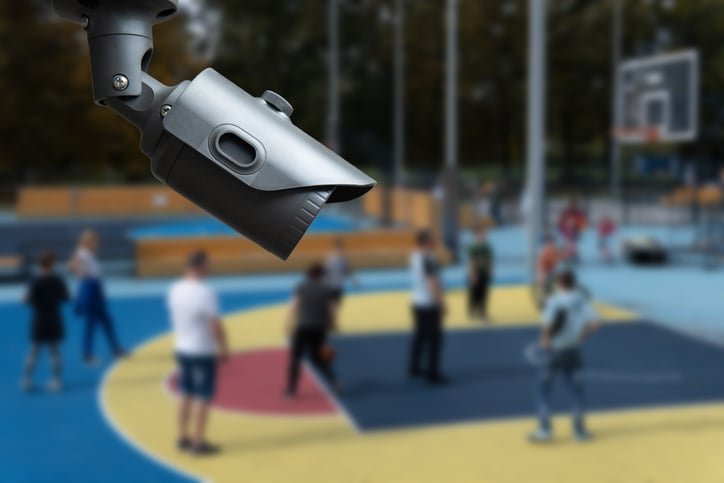
Modern camera systems installed in schools are no longer passive recording devices. AI-integrated video analytics can identify specific behavioral patterns in real time, including loitering in restricted areas, abandoned objects, crowd formation consistent with collisions, and people moving against the flow of traffic during evacuation drills.
These systems use computer vision models trained on large datasets of flagged events When a pattern matches the threat threshold, the system generates an alert School safety staff or local law enforcement, often before a human observer identifies the anomaly.
The accuracy of these systems is highly dependent on camera placement density, lighting conditions, and the quality of the underlying training data. Schools that deploy AI surveillance without addressing infrastructure gaps often find detection rates lower than vendor specifications suggest.
Access control and visitor management
Perimeter security has become significantly more sophisticated. Modern access control systems used in schools include:
- Biometric entry points using fingerprints or facial recognition to authenticate employees
- Visitor management kiosks that cross-reference government-issued IDs against sex offender registries and custom watchlists in real time
- Electrically controlled doors are integrated with hardware lockdown protocols that can secure an entire building from a single command interface
Legacy buzzer-and-camera setups at front entrances have largely given way to these integrated platforms. The key improvement is the elimination of manual verification steps, which historically created bottlenecks and human error in high-pressure entry screening situations.
VAP and Environmental Sensor Networks
Substance detection in schools has become one of the more technologically sophisticated areas of campus security. Bathrooms, locker rooms and other areas outside of camera coverage have historically been blind spots for administrators. Sensor technology has closed a significant portion of that gap.
dedicated to Vape detector for school Use electrochemical and optical sensing technologies to detect aerosol particles and chemical compounds associated with e-cigarettes, including propylene glycol, vegetable glycerin, and nicotine byproducts. Unlike smoke detectors, which respond to burning particles, vapor sensors are calibrated to detect the sub-micron aerosol signature of vaporized liquids at concentrations that would not trigger conventional fire detection equipment.
These devices are typically networked through a facility management platform, generating timestamped alerts with location data that enable administrators to respond within seconds of a detection event. Some systems also log environmental baselines, allowing administrators to distinguish between a vaping incident and a clear product aerosol or humidity spike.
Beyond vaping, the multi-function sensor array can simultaneously monitor:
- Carbon monoxide and nitrogen dioxide, indicators of combustion or HVAC failure
- THC compound signature associated with cannabis use
- Abnormal noise levels consistent with physical altercations or gunshots via integrated acoustic sensors
Emergency communication and lockdown technology
Failure to communicate during school emergencies has historically contributed to injuries and deaths. Technology has addressed this with redundant, purpose-built emergency notification platforms that operate independently of the normal school network infrastructure.
Modern systems allow administrators to:
- Initiate a building-wide lockdown from a mobile device, automatically secure electronic door hardware, activate PA announcements and simultaneously notify law enforcement
- Push geofenced alerts to student and staff devices within a defined campus boundary
- Provide first responders with a real-time floor plan overlay showing door lock status, camera feed and last known threat location
These platforms integrate rather than replace existing physical infrastructure, which reduces deployment costs and allows for phased implementation across large districts.
Data integration and behavioral analysis
Technology is also being applied upstream of physical phenomena. Student information systems are increasingly integrated with behavioral analytics platforms that integrate disciplinary records, attendance patterns, academic performance data and counselor notes to identify students exhibiting early indicators of crisis.
This approach draws on threat assessment research developed by the US Secret Service National Threat Assessment Center, which found that school attackers almost always display observable warning signs before an incident. Technology platforms allow these signals to be systematically tracked rather than relying on individual staff members to connect individual data points.
The legal and ethical dimensions of behavioral data aggregation in schools are actively contested. Privacy advocates have raised legitimate concerns about surveillance overreach and algorithmic bias in student profiling systems. Districts implementing these tools must navigate FERPA compliance, parent notification requirements and data retention policies with legal counsel involved from the start.
Infrastructural gaps
Technology adoption in school safety is uneven. Wealthy districts with strong tax bases set up extensive tiered systems. Granted districts often operate with outdated infrastructure and no dedicated technology budget for security systems.
Federal grant programs, including those administered through the Department of Homeland Security and the Department of Justice, have provided funding avenues for under-resourced schools. However, grant cycles are inconsistent, application processes are resource-intensive, and ongoing maintenance costs are rarely covered, creating sustainability challenges that technology vendors rarely address in their sales cycle.
–