

Something about that night still stays with me
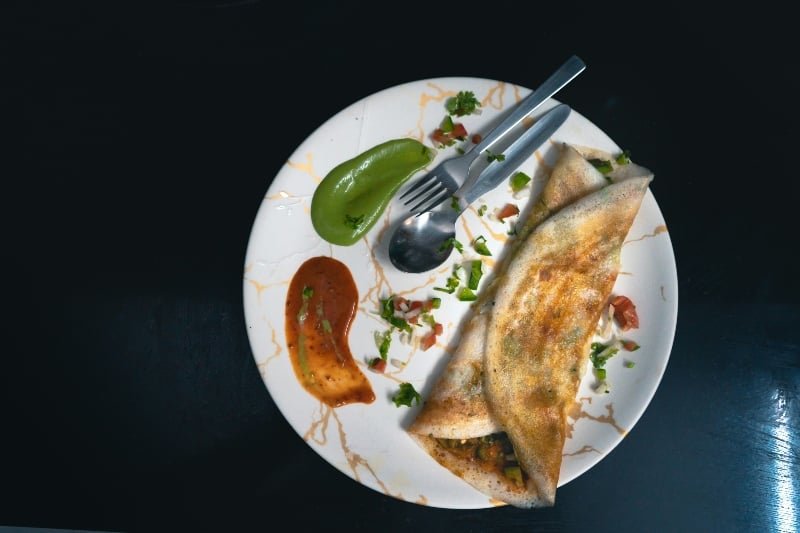
Last night, I went to a restaurant to have dinner with a friend. It was a quiet evening. Families chatted, plates clinked gently and the smell of fresh dosa filled the air. Everything seemed normal.
Until something happens at the table next to us.
A family is gone – and everything looks normal
A family of five entered — father, mother, grandparents, and a young daughter about ten years old. He was probably in fifth grade.
They take their seats and order dinner like everyone else in the restaurant.
The little girl ordered a ghee dosa. When the food arrived, he began to eat slowly, enjoying himself as children often do.
For a moment, everything seemed perfectly normal.
But suddenly the mood at the table changed.
Silence was harder to watch than violence
Dad finished eating quickly.
Then he turned to the girl, his face filled with annoyance.
“Why are you eating so slowly?” he snapped.
The girl kept eating quietly.
Then, without warning, he started beating her.
Slap after slap.
“Hurry up!”
“You have school tomorrow morning!”
“Why are you wasting time?”
The child was sitting there, still trying to eat while hurting.
He didn’t cry out loud. He didn’t argue.
He sits there quietly, trying to swallow his food.
The silence was more painful to watch than the screams.
When the whole room turns against one child
What made the situation even more difficult was witnessing.
No one saved the child.
Not even those who were supposed to protect him.
His mother joined in the scolding.
“I told you not to give this order!” he said sharply.
Grandparents also blame the child.
“You’re delaying everything.”
“We have to wake up early for school.”
In that moment, every adult at that table felt united.
But not in child protection.
They came together to accuse him.
Publicly humiliated, the girl eats silently.
Finally, the father grabbed the half-eaten dosa, packed as a takeaway, dragged the girl by the hand and led her out of the restaurant.
Within seconds they were gone.
But the image of that child stayed with me long after.
When discipline turns to violence
Many parents believe that harsh punishment teaches discipline. But severe corporal punishment rarely teaches discipline.
It teaches fear.
A child who is spanked repeatedly does not learn responsibility.
Instead, the child learns something darker.
“I’m not safe.”
Instead of thinking: “I should eat quickly because we have school tomorrow” The child begins to think, “If I don’t do things perfectly, I’ll get hurt.”
This is how fear gradually becomes a part of the child’s personality.
What happens inside a baby
Harsh corporal punishment doesn’t just hurt the body.
It leaves a deep psychological mark.
Children raised in such an environment often develop constant anxiety. They tend to think of making mistakes even in small matters.
Low self-esteem When adults constantly blame them, children begin to believe that they are the problem.
Many children suppress their emotions. They stop expressing feelings because talking can lead to punishment.
Trust also gets complicated. It becomes difficult to trust others when those they are supposed to protect hurt them.
Some children develop fear-based compulsions. They don’t understand because they are afraid.
The effects of strict parenting can last for years, sometimes decades.
A child can grow into an adult who looks strong on the outside, but inside still carries the fear, silence, and pain of that little child who just wanted to feel safe.
Sometimes it’s not really about discipline
Strict parenting isn’t always about discipline.
Sometimes, it is reflected narcissistic control.
In such homes, perfection is expected at all times. Small mistakes are treated as serious failures. Parents react with anger rather than guidance.
Children are often seen as a reflection of their parents’ reputation. Their emotions and struggles are ignored.
A child’s emotions are ignored
Over time, control replaces empathy.
Obedience to fear becomes more important than understanding the child.
What a healthy discipline might look like
Discipline doesn’t have to come from fear.
In many homes, discipline is often confused with control. But true discipline is helping a child understand consequences while patiently guiding the way.
Imagine unfolding that same moment differently in a restaurant.
The father notices that the girl is eating slowly. Instead of reacting with anger, he leaned slightly towards her and spoke calmly.
“Finish slowly, but try to eat a little early. We have school tomorrow.”
At that point, the child hears guidance instead of fear.
A child who feels secure is more willing to listen.
Sometimes babies eat slowly because they are tired. Sometimes they are confused. Sometimes they are just enjoying their food as babies normally do.
These small moments require patience, not punishment.
A parent can gently remind the child of the time.
“We still have to get home.” /
“We have school tomorrow morning.” /
“Try to finish a little faster.”
Even a small sentence spoken quietly can completely change a child’s experience.
When parents guide instead of threaten, children learn something very different. Children learn responsibility without losing their sense of security.
Instead of thinking, “I will suffer if I make a mistake.” The child begins to think, “I should try to do better.”
Children respond much better to calm explanations than to fear.
When parents show patience, children gradually learn self-discipline. They begin to understand time, responsibility and respect.
They learn something more important.
A mistake is not a disaster. They are learning opportunities.
This type of parenting builds confidence instead of anxiety. It teaches the child that they are supported even if they are not perfect.
Sometimes the small gestures are the most important. A parent gently placing a hand on a child’s shoulder, a reminder to speak calmly instead of publicly insulting, with patience instead of anger. These small choices quietly shape a child’s sensory world.
Years later, the child cannot remember the exact words spoken that night. But they will remember how they felt.
Are they afraid?
Or did they feel safe?
This difference silently shapes the kind of adults they become.
He was dragged out with little more than a half-eaten dosa
That night, the restaurant returned to normal within minutes.
The conversation continued. Plates were served. Life went on.
But somewhere outside that restaurant, a little girl went home with a half-eaten dosa.
She carries insults.
He carries fear and the silent lesson that love sometimes comes with pain.
The world may soon forget such moments.
But for a child, moments like these can shape an entire life.