

Over the past few decades, meditation has grown in popularity, more people have realized its importance, and numerous academic studies have provided evidence of its effects.
So the hippie trend in the western world can be studied as a trend that has been adopted by the general public as part of the wellness routine and celebrities and various industry leaders are adopting it.
One form of meditation whose practice has become a movement is Transcendental Meditation (TM). Millions of people practice its techniques worldwide, making it one of the most influential forms of meditation today.
What is Transcendental Meditation?
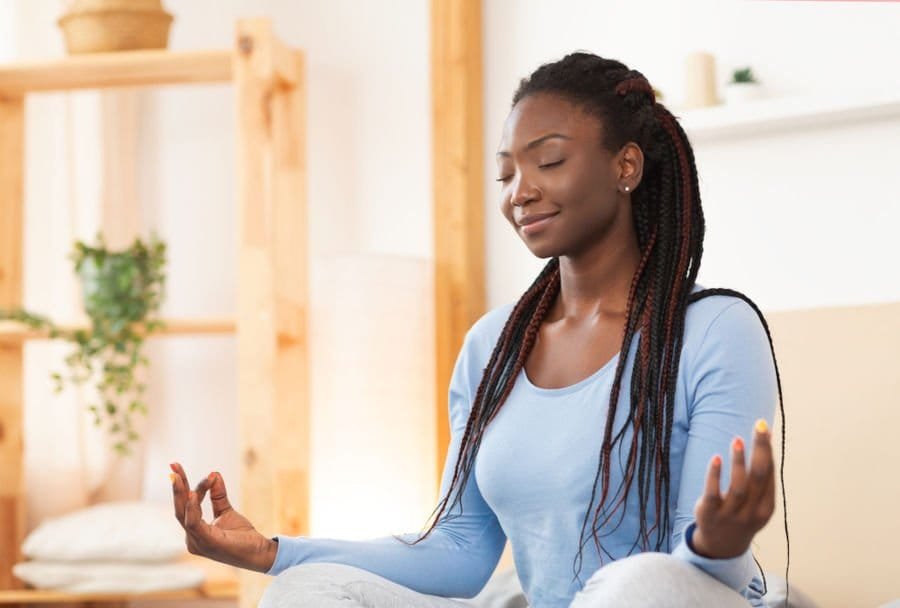
Like any other meditation technique, transcendental meditation seeks to bring relaxation and tranquility into one’s life. In transcendental meditation, the individual Sit still in a comfortable position Close your eyes and silently repeat a mantra.
Their emphasis is not on chanting mantras to help remove any distractions. Meditation is usually done for fifteen to twenty minutes a day.
The practice of transcendental meditation originates from the ancient Vedic tradition of India. It was brought to the United States and given worldwide prominence by the late Maharishi Mahesh Yogi, who based it on a system he learned from his own master and developed a teaching program of traditional meditation techniques.
Since the 1950s, the movement has been taught universally, first in India and then worldwide.
By the time of his death in 2008, the movement had gone global with a series of world tours, training programs for teachers, endorsements from practicing celebrities like David Lynch, and adoption by for-profit organizations and educational institutions alike.
Currently, Maharshi Foundation, Global Country of World Peace, and Maharshi Vedic Education Development Corporation are the main organizations spreading teachers’ movement and training programs. The number of practitioners of this meditation technique is estimated to be more than 5 million members worldwide.
Transcendental meditation mantra
Mantras form a significant part of transcendental meditation. Yet, unlike other meditation techniques, they are not the focus of the process but a means to an end, in this case, transcendence into silence. The mantras used have two qualities.
First, they are meaningless words that allow for better focus and deep settling into pure consciousness. Having a word with meaning will keep your mind locked on that word and prevent crossing over.
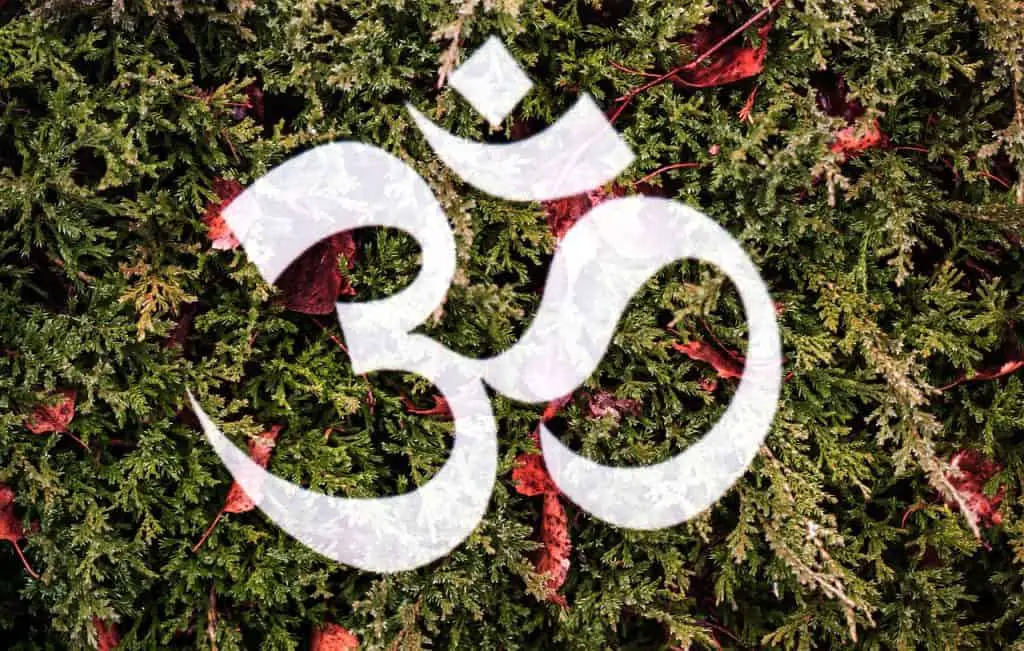
Second, mantras have a vibration that resonates with the primordial sound Om, which is closest to silence. As a result, mantras are great for guiding the mind along the path Silence and peace.
The mantras have their origins in the Vedic tradition, and they are in Sanskrit, which is the language that is the closest human imitation of the natural vibrations produced in the field of pure consciousness that yogis call self. The transcendental properties of the mantras of this technique bring healing to the entire body and are not limited to specific parts of the body.
Learning your mantras is given to you by a trained instructor. There are over 1000 traditional mantras that are used for transcendental meditation. However, you will be given your specific mantra by your certified TM instructor.
For your use of mantras to be effective all the following aspects must be met;
- You need to choose the right mantra to reflect your personality as assessed by your teacher.
- One must know how to use the mantra properly
- You need to be able to explain what you are feeling
- You need regular support and guidance from a certified teacher
Prescribed mantras are also age dependent and include some of the following examples; eng, em, enga, ema, ieng, iema, shirim, kirim, kiring, shiring, hiring, sham, and shama.
Related Articles: “Meditation, Where to Begin” – Opens in new tab.
How to do transcendental meditation
Based on what has been pointed out above, it is clear that TM is one of the easiest meditation techniques you can practice anywhere. The only emphasis is to do it under a trained teacher so that you get all aspects right and who can guide you later for free.
How to do this type of meditation properly begins with finding the right teacher. TM teachers are trained and certified by the Maharishi Foundation. Education follows a 7-step course structure.
There is a 60-minute introductory lecture followed by another 45-minute lecture followed by a short interview followed by about two hours of individual instruction.
The instructor styles the technique so that it is individualized just for you. Once you are done with these initial instructions, you will receive a short ceremony where you will be given your mantra.
Over the next three days you have another 2-hours of instruction for the instructor to check you are correct. In the following months, the instruction focuses on making sure you have the right technique and understand the benefits and other details surrounding transcendental meditation.
It is described as an easy technique to perform because it requires no concentration, mindfulness, or emptying of the mind or controlling our mind. You just need to relax and breathe naturally while focusing only on the silent mantra.
Related reading: Guide to different types of meditation practice – Opens in new tab
A typical daily plan involves about 20-minute meditation before breakfast and after dinner. This includes an overview of what is included;
- Sit comfortably on a chair with your feet touching the ground and both arms and legs free.
- Take a few deep breaths to relax your body and then close your eyes.
- Repeat your mantra in your mind.
- When you recognize that you are thinking or getting distracted, simply return to your mantra.
- After 15-20 minutes, slowly bring yourself back to the world by moving your fingers and toes.
- open your eyes
- Sit for a few extra minutes until you’re ready to continue your day or night.
Do you want to know more about meditation? See our recommendations at”Meditation bookshelf” And many of our free resources “Free Meditation Library“ – Opens in new tab
Benefits of transcendental meditation
You can make such investments only if you have guaranteed benefits. Although Transcendental Meditation is really easy to do, there are other benefits that should make you consider it as your meditation technique. Several studies have supported many of these benefits. They include;

1. Relief against stress and anxiety
Relief from stress is one of the main benefits you get from TM. Studies of PTSD patients and employees in stressful work situations have shown that this type of meditation helps your body and mind not overwork to stressful stimuli.
TM balances the activation and hormonal levels of the nervous system and also helps to increase brain coordination.
2. Improved efficiency and work productivity
In studies conducted in large and small companies, employees who used TM as a meditation technique showed significant improvements in their productivity and workplace efficiency within three months of practicing this meditation form.
They showed improvement in several areas including professional relationships, effectiveness, leadership, general health status and job satisfaction.
3. Improved school performance
Students have also benefited from TM, exhibiting improved characteristics in critical areas for better performance Its effects have been observed among students of all educational levels.
Observed changes include reduced school-related stress, depression and anxiety, improved academic outcomes, increased cognitive and general intellectual performance, and finally, a reduction in negative school behavior.
4. Increase overall intelligence
Further research indicates that TM meditation can help increase overall intelligence with tests showing improvements in various domains and skills;
- Advanced critical thinking especially in new situations
- Faster processing of information
- Enhanced cognitive, volitional and emotional abilities
5. Reduces risk of heart disease and regulates blood pressure
Practicing TM has been shown to reduce the risk of cardiovascular disease and lower blood pressure to healthy levels.
6. May help treat alcohol and tobacco-smoking addictions
One of the benefits of TM as a meditation technique is how it enables addicts to break their habit after using the technique. As this leads to better mental-health, it eventually sees addicts take steps to kick their habit as a natural progression.
The technique is more effective than other meditation forms in this regard, and practitioners have higher abstinence rates.
Related reading: 8 Health Benefits of Meditation – What New Research Shows
7. Improved relationships
Another positive effect of TM is improving your relationships at home and at work. With less stress and a better outlet for depression, practitioners have a better outlook on life and find higher satisfaction in their careers and relationships.
8. May help manage hyperactivity
People struggling with hyperactivity can find an effective management plan in Transcendental Meditation. At three months, participants who had ADHD symptoms improved in the following areas;
- Sleep quality
- Their organizational capacity
- their happiness
- Ability to work independently
- Improved focus and concentration.
Also, check out these studies
Transcendental Meditation continues to influence the lives of millions of people worldwide. All you need is to find one of the many certified instructors or join an organization that offers such classes near you.
Various studies provide strong evidence of the impact it can have on your life, and given its straight forward techniques, it’s worth your time, and should be considered for your wellness plan.
Featured image from Deposit Photo
Do you want to know more about meditation? See our recommendations at”Meditation bookshelf” And many of our free resources “Free Meditation Library“ – Opens in new tab