


–
Patented in 1960 under the trade name Delrin, Acetal is a strong, low friction performance plastic widely used in the manufacture of engineering parts. Also known as Polyoxymethylene (POM), the material is selected for its outstanding strength, exceptional dimensional stability and high wear and abrasion resistance in the automotive, electronics, medical and food processing industries.
These properties put it ahead of competing engineering-grade plastics such as polyethylene terephthalate (PET) and polyvinyl chloride (PVC), in addition to traditional choices such as brass, aluminum and stainless steel.
Key Features and Benefits

Acetal’s widespread use can be attributed to a long list of favorable properties:
- High mechanical strength: Acetal plastic maintains structural integrity under mechanical stress. This strength comes from the strong chemical bonds between the polymer chains of the material. Since Acetal offers high dimensional stability and resistance to cracking or deformationIt is widely seen in applications requiring high load-bearing capacity, including gears, bearings and cams.
- Less friction: The smooth surface of POM plastic reduces friction on moving parts, reducing wear and energy loss. High wear and abrasion resistance of the material ensures long service life of the material subject to consistent friction and movement.
- Good chemical resistance: Due to the tightly packed polymer chains, acetal resists a wide range of chemicals, including acids, bases and solvents. This ensures their suitability for chemically active environments, such as chemical processing and the food and beverage industry.
- Low moisture absorption: POM is known for its low water absorption rate, which prevents deformation and swelling in high-humidity settings.
General Use and Industry

Industrial Machinery and Automation
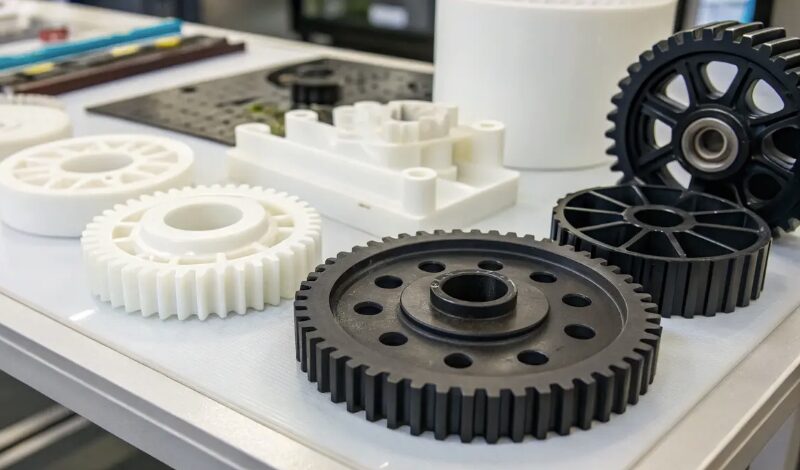
Acetal becomes important in bushings, bearings, gears and sprockets due to its high load-bearing capacity, low coefficient of friction and chemical resistance. The material’s durability and wear-resistance are placed in conveyor systems, while low moisture absorption is beneficial in plumbing components and pumps.
Automotive and Transportation
Safety systems requiring high strength and fatigue resistance, including seat belts, tensioners and buckles, are routinely made of POM material. Resistance to chemicals such as fuel and oil means the polymer can be found in fuel pumps, rotating containers and transmission units, ensuring optimum performance free of leaks.
And low friction and self-lubricating qualities are common in parts like latches, knobs and window mechanisms. An external use engine and transmission components. High heat resistance and dimensional stability are important for throttle bodies, gears, chain tensioners, pump impellers and thermostat housings, among other parts.
Food processing
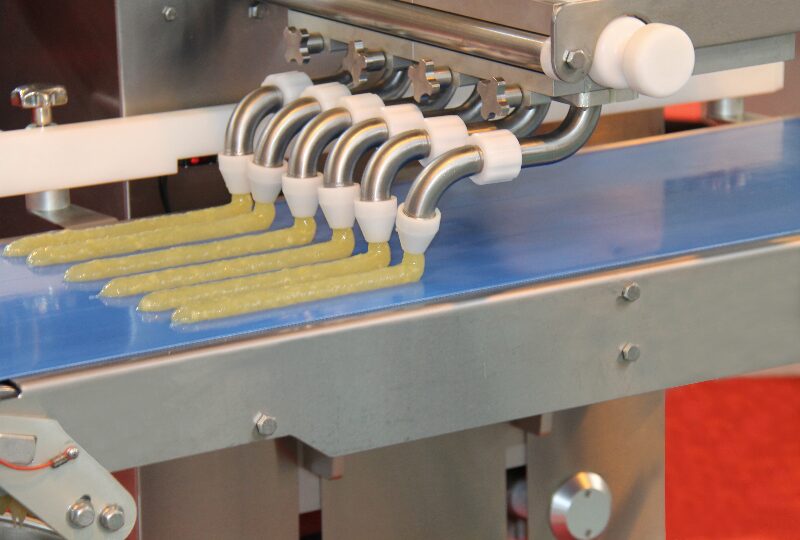
Food-grade POM is seen in food processing equipment due to its good chemical properties, low friction and excellent wear resistance. Common parts include conveyors, gears, cams and pumps in food handling equipment. Low moisture absorption and resistance to cleaning agents means that acetal polymers are frequently used in hygienic handling and food packaging products, where the material prevents bacterial growth.
Electronics
Insulators, connectors and switch components benefit from Acetal’s electrical insulation and structural rigidity. Low friction, wear-resistance and anti-static qualities mean the polymer is found in items from scanners, printers and copiers to cell phones, enclosures and battery housings.
Medical equipment
Surgical instruments, drug delivery systems, imaging devices, insulin pens, inhalers, laboratory analyzers, and dental drills are some of the medical items that contain medical-grade acetal. The material’s stiffness, mechanical strength and resistance to strong chemicals result in tool and material longevity.
Acetal form factor
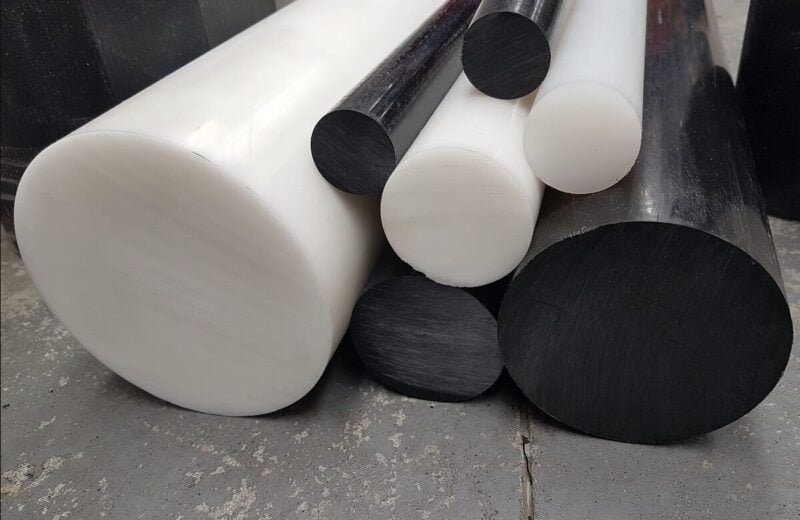
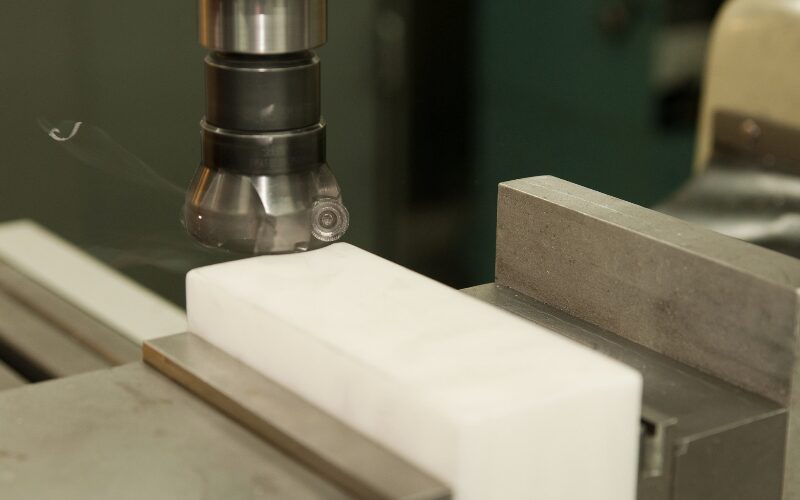
Polymers can be obtained from three main form factors – sheets, rods and tubes. Choose sheeting when machining the material into flat components, complex profiles and wear strips with a CNC mill, router or laser cutter. Rods are preferred for cylindrical objects, such as gears and bearings, often of high thickness and machined with CNC lathes or waterjet cutters. And acetal tubing is ideal for inner diameter parts including bushings, spacers and seals, often with specialized CNC turning lathes (Swiss machines) and milling machines.
Specialists use acetal granules for injection molding and extrusion of complex components (electronics, medical device components, window regulators, etc.) while thin POM films are seen in electrical insulation, seals, and automotive trim parts, again produced by extrusion, injection molding, or thermoforming.
Type and grade

All the above form factors are available in two formulations – copolymer acetal (POM-C) and homopolymer acetal (POM-H or Delrin). Choose POM-C for superior chemical resistance, low crystallinity, improved structural uniformity and easy processing. This form of polymer is offered in standard grades and is used for hot water and chemical resistance (often marketed as food-grade acetal); POM-C is 25% glass-filled reinforced glass fiber (lends additional rigidity) and under the Duracon® and Hostaform ® brand names in high-performance applications where mechanical strength is called for.
Acetal or delrin, a homopolymer of higher crystallinity, exhibits up to 15 percent higher stiffness and strength at the cost of less chemical and thermal resistance. General-purpose grades and grades include DuPont patented Delrin®150/150P – seen in high-load machine and automotive components, and Delrin®500/500P – a low viscosity grade found in precision-engineered components with high dimensional stability.
Compared to other engineering-grade plastics
Both types of acetal are viable alternatives to other engineering plastics. Like nylon, the material exhibits high strength and wear resistance, but outperforms nylon in the need for a low coefficient of friction and areas subject to high humidity or water ingress. Nylon, however, has slightly higher impact resistance and higher tensile strength at room temperature.
Compared to polyethylene (PE), the material exhibits better dimensional stability, making it more suitable for precision and machined parts as well as higher rigidity. PE benefits from somewhat better chemical resistance and lower cost. Similarly, acetal exhibits higher strength at lower concentrations than polyvinyl chloride (PVC). Superior chemical and heat resistance, and easy recyclability.
Polymers are also favored in common industrial-grade choices, including high impact polystyrene (HIPS) for scratch resistance, polypropylene (PP) for high chemical resistance, and polyethylene derivatives such as HDPE (high density polyethylene) for strength and stiffness.
Considering its favorable properties, Acetal has proved its place in demanding applications. It is easily machined and cut to size with rods from 8 mm to 250 mm thickness and sheets of varieties between 8 mm and 100 mm and standard building sizes.
–