Consecration is the intentional devotion of an object to a specific purpose. To sanctify something means to sanctify it with a small ritual or blessing.
Anything can be sanctified. You can consecrate anything you use in your ritual, such as jewelry, amulets, and clothing, as well as the ground on which you perform your ritual.
However, once an object becomes sacred, it can no longer be used for everyday, mundane purposes. In fact, these items should not even be stored near other common, common objects. Since they are now holy, you must treat them as such.
The tools we use in ritual are an important part of what we do. They are devices that guide our will and energy to achieve the task we are doing. The more time we use these types of tools and the more effort we put into them, the better they work.
In many paths of magic and modern Paganism, magical tools are consecrated before use. But note that for many others, this is not a requirement. In short, if you think it’s important to sanctify things in your ritual, it is. Some witches may use it in some spells but not in others. Like many other parts of the craft, it differs from person to person.
Cleansing And charging your equipment and components can seem like a chore at times. However, it is always worthwhile to take the time to complete these processes. Not only is the energy of the object much better, but when you focus your practice in this way, powerful changes occur in your own energy as well. (Related reading: How to cleanse an object for magical or ritual use – opens in new tab)
Why sanctify an object before ritual use?
Following the process of sanctification, the subconscious will regard the object as sacred and therefore of special significance. That is, the ritual or procedure you perform with that object now will be particularly significant, increasing the chances of success.
Your magical practice will work better if the tools and objects you use are sacred to your subconscious mind.
Related reading: How to Talk to Your Subconscious Mind – Opens in new tab
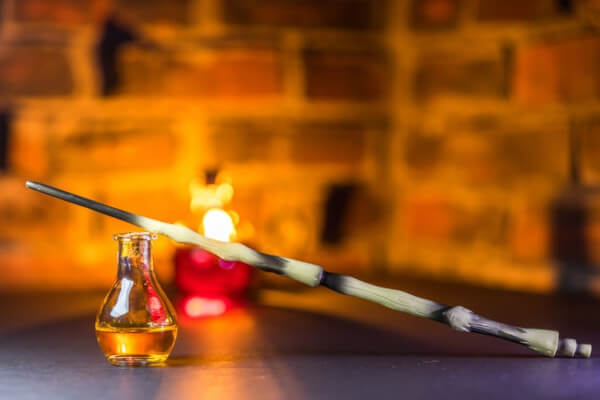
Consecration procedures for magical objects
Invoking gods and goddesses as well as the elements is a common part of sanctification. It connects ritual items directly to the divine.
This can be a simple or complex operation depending on your path. Throwing a circle And engaging in a ritual of banishment is optional. Some people charge new objects as part of a larger ritual.
An easy way to do this is to use your imagination.
Visualize the white light coming from the ground to your feet, legs, chest, under your arms, through your hands and into the object until it glows.
Or a white light flowing from above your head to below your hand, through your hand and into the object as you pray and declare that the object is now sacred and holy.
You want the object to shine in light, and the best place to do that is on your altar in your sanctuary.
Use of holy water
All you need is holy water (you can also use moon water) and a piece of cloth.
After you clean the object, hold it in your hand and tell it what to do. Simply say that its life as a mundane object has ended and its existence as a magical object is about to begin. Wrap the fabric around the item.
The fabric represents a funeral shroud; You are “burying” old objects. Declare that the object’s previous life has ended.
Remove the object and use holy water to sprinkle or mark it. Declare that you have brought it back to life and that it is now a magical item in your possession.
If you want, you can spend more time explaining what you expect from the object; Otherwise, set it aside.
Diploma Course in Spellcasting
- Certified Course
- Recognized courses
Course information
- 10 modules
- Lifetime access
- Study Group Access

use “Lightwarriorslegion466 Code for 70% off.
Using four ingredients
If you work with the four elements often, you may want to consecrate an object in a ritual Air, Earth, Fire and Water. By presenting the object to the four elemental forces, it is sanctified and blessed from every direction.
The following is a common ritual for the consecration of magical objects such as clothes or jewelry or even an altar.
Remember that, as with anything else in magic, there is rarely a right or wrong way to perform a task. This is just an example of how you can handle things; Many traditions have their own unique ways of consecration.
Let’s begin
Place symbols of the four elements on an altar. It is common practice to deploy
- the world in the answersymbolized by a bowl of salt
- air in eastusually symbolized by incense
- the fire in the southsymbolized by a the candle
- the water in the westsymbolized by the bowl of water
Make your representational decisions based on what feels right to you. It totally depends on you and your general work style.
If this is part of your tradition, Now cast a circle. Light candles and incense. Take your tool, put all your energy into it and think for a few minutes about what you want to do with it.
- Take the tool or item you wish to consecrate (let’s say an atom) in your hand and north face. When passing over the salt say:
“Guardian of the North, Power of the Earth; I consecrate this Athame and charge it with your power so that it may be used for sacred purposes.”
- Turn east And while holding the breath in the incense smoke say these words:
“Guardian of the East, Power of the Wind; I consecrate this Athame and charge it with your power so that it may be used for sacred purposes.”
- next, Turn south And say these words candle flame– Be careful if it is made of flammable materials:
“Guardians of the South, Power of Fire; I consecrate this Athame and charge it with your power so that it may be used for sacred purposes.”
- finally, Face west And say these words while passing your Atham over the cup of water.
“Guardian of the West, Power of Water; I consecrate this Athame and charge it with your power so that it may be used for sacred purposes.”
Next, place the tool on your heart and offer your energy and feel the energy pass between you and the tool.
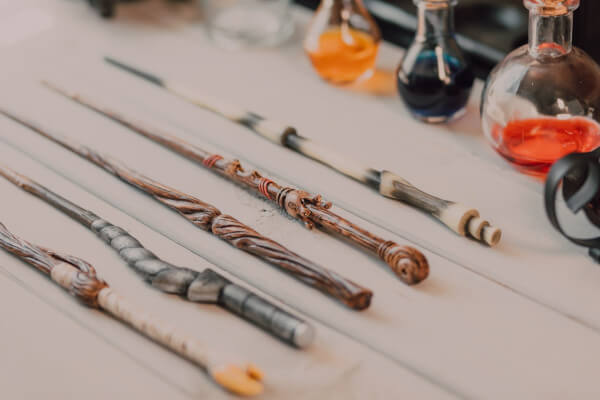
At the end of the ritual, place the tool on your altar, do your regular work, and let it acclimate to your altar’s energy. After a night, you can start carrying it around with you and use it like you would any other tool.
something Branch of Wicca And other pagan traditions believe that using an object after consecration helps to solidify the sanctity and increase the power of the tool.
If you’re new to magic, it’s a good idea to experiment with a few different practices before settling on one that feels right for you.
More tips on purity
- you can use Knot magic Sealing sanctity is by tying a string or ribbon around your item and carving into it a sigil that means something to you.
- Traditionally, altar tools are consecrated in a pentacle. However, a pentacle can also be drawn over the object using a wand or athem in the center of the altar.
- Consecration is often performed in Circle on full moonAlthough they can be performed at your altar at any time.
- It’s even better if you can make a magical tool by yourself.
- You don’t have to find a tool right away. Take your time, and remember that these are tools you’ll be using for a long time.
- When you’ve found the perfect tool, don’t try to get it for less. If the price is fair, you should pay what the seller wants.
- This is fine as long as you can trade something in exchange for the tool. You are still paying a reasonable price.
Do you want to know more about Magick? Check out our recommendations atThe Magic BookshelfAnd many free resources at our “Free Magic Library“

Image featured by RODNAE Productions from pexels.com